Brenna Barnhill
October 14, 2026
Billboards, mailers, and handshakes still work, but only when they lead somewhere. How local businesses connect traditional and digital in 2026.
The quick read
Yes, traditional marketing still works in 2026, and in a feed full of AI content real human presence stands out more than it has in years. But a billboard, mailer, or sponsorship only pays off when the people it reaches can find you online and get to know you there. The winning setup pairs offline visibility with honest, story driven content, so trust starts before anyone walks in your door.
Someone on Reddit recently asked whether traditional marketing is still relevant in 2026. I expected the answers to be a pile on for digital. They weren't. One of the top replies argued that traditional marketing matters more right now, not less, because everyone's feed is flooded with ads and AI content.
I plan content calendars for a living, so you might expect me to disagree. I don't, not entirely. But I think the comment misses where human connection actually happens for most local businesses now. Here is the honest version, and it fits inside the bigger picture of how customers actually find and choose you online.
Yes, for local businesses especially. Traditional marketing means billboards, print ads, direct mail, radio, sponsorships, events, and meeting people face to face. Digital marketing means the channels that run on a screen: Google search, your website, social media, email, online reviews, and AI assistants. The traditional channels still build recognition and trust. What changed is the job they do. They start the relationship, and your online presence is where it gets confirmed and grows.
Think about how someone actually chooses a dentist, a gym, or a med spa in Tyler or Lindale. They pass your sign on Broadway for three weeks. A friend mentions you at church. Then they pull out their phone and look you up. What they find in the next ninety seconds decides whether that billboard was money well spent.
So the real question was never traditional or digital. It is whether your offline marketing hands people to an online presence that feels as real as you do in person.
Because the old way worked for a long time. Plenty of owners built their business on a yellow pages ad, a stack of business cards, and a good reputation around town. They miss those days, and honestly, I get it. It was simpler.
But the way people find and choose a business has changed, and it is still changing. Digital is only growing. Leaning on the methods that worked twenty years ago, while customers are searching Google, asking AI assistants, and scrolling Instagram, means showing up where your buyers used to be instead of where they are now.
That doesn't mean throwing the old tools out. Flyers, networking events, and handing someone your business card still matter, and I'd never tell an owner to stop. Being in business means adapting with the times. Both are here to stay, so the goal is to marry the two: keep the handshake, and make sure it leads somewhere online.
Right now it often does, and the reason is simple. People are tired of content that feels like nobody made it. When feeds fill up with polished ads and AI posts, the business that feels like a real person wins attention by default. That is the heart of the Reddit comment that started this, and I agree with most of it.
The commenter made three points. Physical presence sticks, because you pass the same billboard or poster on your way to work every day until it becomes part of your routine. Personal contact builds trust, because a visit or a thoughtful handwritten note beats any automated funnel. And it is not either or. Digital is great for reach and testing, but the trust that closes the deal still comes from people.
All true. A former teacher will tell you the same thing about a classroom. The kids who trusted me were the ones I greeted at the door every single morning, not the ones who got the nicest newsletter.
The commenter planned a small experiment: a few posters in one neighborhood, a handful of personal visits, and the same budget on social ads, then compare which brings in more real conversations. I love that instinct. But the test has a blind spot.
It treats social as an ad you scroll past in half a second. For most local businesses, that is not where social does its best work. Paid ads are one slice. The bigger slice is organic content that lets people get to know you, and that kind of content does the same thing the billboard does. It shows up again and again until you feel familiar.
Repetition is the reason billboards work. The algorithm runs on repetition too. The difference is what people see when they get there.
Yes. People meet businesses online every day, they just do it one reel and one story at a time. When your content sounds like you and shows your actual life and work, followers start to feel like they know you before they ever walk in. That is the same trust a handshake builds, just spread across weeks instead of one conversation.
Here is how it usually happens. Someone watches a reel that says exactly what they have been thinking. They relate to it, so they watch to the end. The algorithm notices and shows them your next post, and the one after that.
Somewhere around the third or fourth time, they tap your name. They read your bio, scroll your grid, and see what you offer. Now they are not a stranger watching a video. They are someone deciding whether to spend their time and money with you. Nobody shook a hand, and trust still got built.
Your feed introduces you. Your stories are where people get to know you. This is where we encourage every client to show up as a person, not just a business.
Show the behind the scenes of a normal Tuesday. Share where you love to get dinner, the coffee you are currently obsessed with, the thing you can't stand. It feels small. It isn't. Those are the details that make a follower feel like they know you, and the people watching your stories every day are your warmest leads.
Replying to comments, answering DMs the same day, and engaging with your followers' content are the online version of the personal visit. When you comment on a customer's post or answer their question by name, you are building a real relationship. It just happens to be on a phone.
All of this is what we do for our clients in social media management, and it is also what we coach them to do themselves. The account runs on our system. The connection still comes from them.
Not sure whether your own account feels human or just busy? The free Social Reality Quiz takes about a minute and names the one thing worth fixing first.
Yes, behind the scenes, not in front of the camera. We use AI every week for research, planning, first drafts, and making sure posts are searchable. We never let it replace the face, the voice, or the stories. Customers can feel the difference, and the research below shows they are paying closer attention than ever.
In practice, AI helps us find the questions your customers are asking, sort a month of ideas into a calendar, and tighten a caption so it reads well and ranks. Then a real person shoots the video, tells the story, and answers the comments. AI makes the work faster. It doesn't get to be the relationship.
That line matters most in exactly the places people want to feel you. Testimonials, behind the scenes moments, and your own story should always be real. If a customer finds out the warm, personal post was written by a machine, you lose more trust than the post ever earned.
The published data points in one direction: people trust people, offline ads push buyers online, and AI content is making consumers more skeptical, not less.
People still trust people most. Nielsen's 2021 Trust in Advertising study found 88% of people worldwide trust recommendations from people they know more than any other channel, and that figure has sat above 80% in every edition since 2013.
Offline ads send people online. A 2019 Nielsen study for the Out of Home Advertising Association of America found more than four in ten people used online search to look up a brand after seeing an outdoor ad. The billboard starts it. The search finishes it.
Mail is having a moment. In the ANA's 2025 Response Rate Report, direct mail to new prospects ranked near the top for ROI at 67%, just behind email, and 71% of marketers planned to expand their direct mail and display spend.
AI content is eroding trust. In a Gartner survey of US consumers from mid 2026, 65% said brands produce too much AI generated content, and 57% said it made them less trusting of brand messaging overall. A Clutch survey from August 2026 found 53% of consumers are less likely to buy from brands they know use AI in social content, and nearly 90% want it disclosed.
None of these studies pits a poster in one neighborhood against a reel for a local business. That is the honest takeaway. The evidence describes a journey: trust comes from real people, offline visibility sparks curiosity, and the search that follows decides who gets chosen.
That journey is exactly what we build inside the Obvious Choice System: positioning, content, a website that catches the search, and email that keeps the relationship warm, built as one system.
Make every offline touch point lead to an online place that feels like you. Keep the billboard, the sponsorship, and the handshake. Just make sure the person who sees them can find you in one search and get to know you from there. Four moves cover it.
A QR code that opens a specific page, not your homepage. Your name exactly as it appears on Google. One clear thing to do. If your mailer lists a phone number, a website, three social handles, and a coupon, people will do none of them.
Then make sure the search works. A complete Google Business Profile, recent reviews, and a website that books are what catch the people your billboard sends. If you are still deciding whether you need that site, we covered it in do I need a website if I have Instagram?
In East Texas, a Friday night football banner, a booth at the farmers market, and a church directory ad still do real work. Take your phone with you. Post the event, tag the people you met, and put it in your stories that night. The person who shook your hand on Saturday should see your face again on Monday.
If you want to run the Reddit experiment yourself, do it. Just track what matters. Put a unique QR code or tagged link on each poster and mailer, then connect Instagram to Google Analytics so you can see what each channel actually sends. Count calls, DMs, and bookings, not likes or views. And give it at least two to three months, because trust doesn't build in a week.
Most owners we talk to aren't short on effort. Their social is being handled by an assistant, the front desk, or a family member squeezing it in between other jobs. The posts go up, but nobody is building the relationship. If that sounds familiar, the $297 Brand Audit shows you exactly where people are slipping away, from the billboard to the booking.
Traditional marketing reaches people offline: billboards, print, direct mail, radio, sponsorships, and face to face events. Digital marketing reaches them on a screen: search, your website, social media, email, reviews, and AI assistants. Traditional starts the relationship in the real world. Digital is where people confirm it before they book.
Per person reached, usually yes. A billboard or a mailer is a real check, while organic social costs time and paid social can be tested for very little. But a mailer to 500 nearby homes can beat a boosted post on actual phone calls, so judge each channel on what it books, not what it costs.
No. Direct mail and local print still earn strong response, especially for service businesses with a clear local audience. Print works best when it points to one specific next step online, like a QR code to a booking page.
Yes, when you know what yours does. Give it a unique link or QR code and watch for a lift in people searching your business name. If nobody can find a booking path after they search, fix that first. The billboard may be working fine and losing people at the next step.
It is the most trusted source there is, but it doesn't scale on its own. Referred customers still look you up before they book. What they find online either confirms the recommendation or makes them hesitate. We wrote more about this in how to get clients without relying on referrals.
Only if they can see it where they expect a person. Use AI for research, planning, and editing. Keep your face, your voice, your stories, and your replies human.
Keep the handshake. Keep the billboard if it is earning its place. Then make sure everyone it reaches lands somewhere that feels like you, with stories that let them know you and a clear way to book. That is how traditional marketing and social stop competing and start working together.
If you want a team to build that for you, book a twenty minute discovery call and we will map where your offline and online marketing should connect. Or start with the Brand Audit and see your business the way a stranger does.
Written by
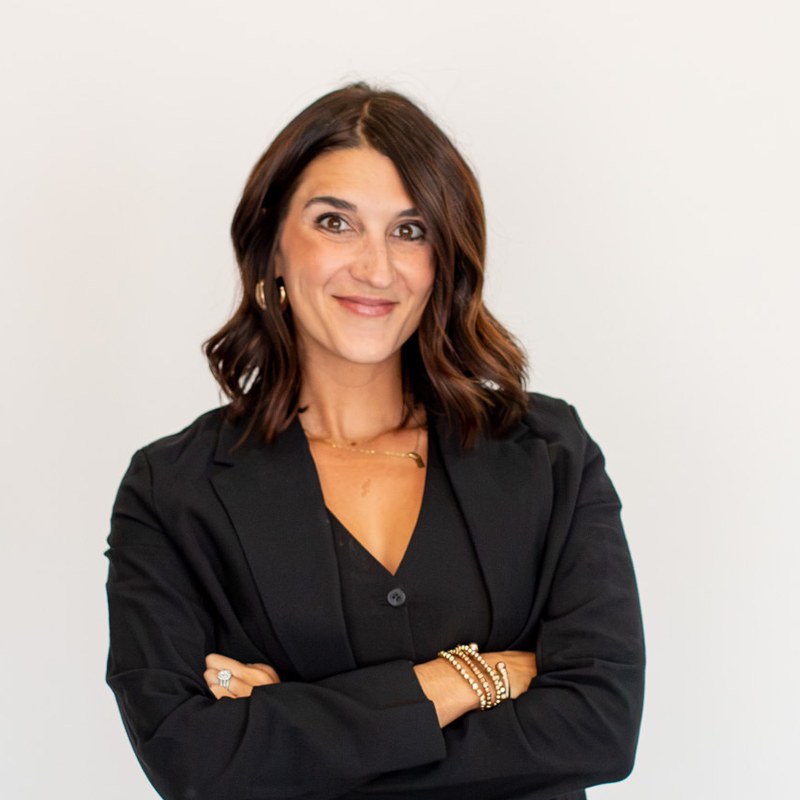
Brenna Barnhill
Co Founder and CEO, Flourish Marketing Agency
Brenna Barnhill is the co founder and CEO of Flourish Marketing Agency in Tyler, Texas, and a former teacher with a degree from the University of Texas at Tyler. She plans and runs the posting calendars for 8 active client accounts across 6 industries, and coaches owners on showing up in their stories as real people. This article reflects the human first content approach behind every calendar she builds.
From the founders' desks
The $297 Brand Audit shows you where customers lose you, in a week, no call required. Or browse more Journal articles and the full guides.
Get the Brand Audit